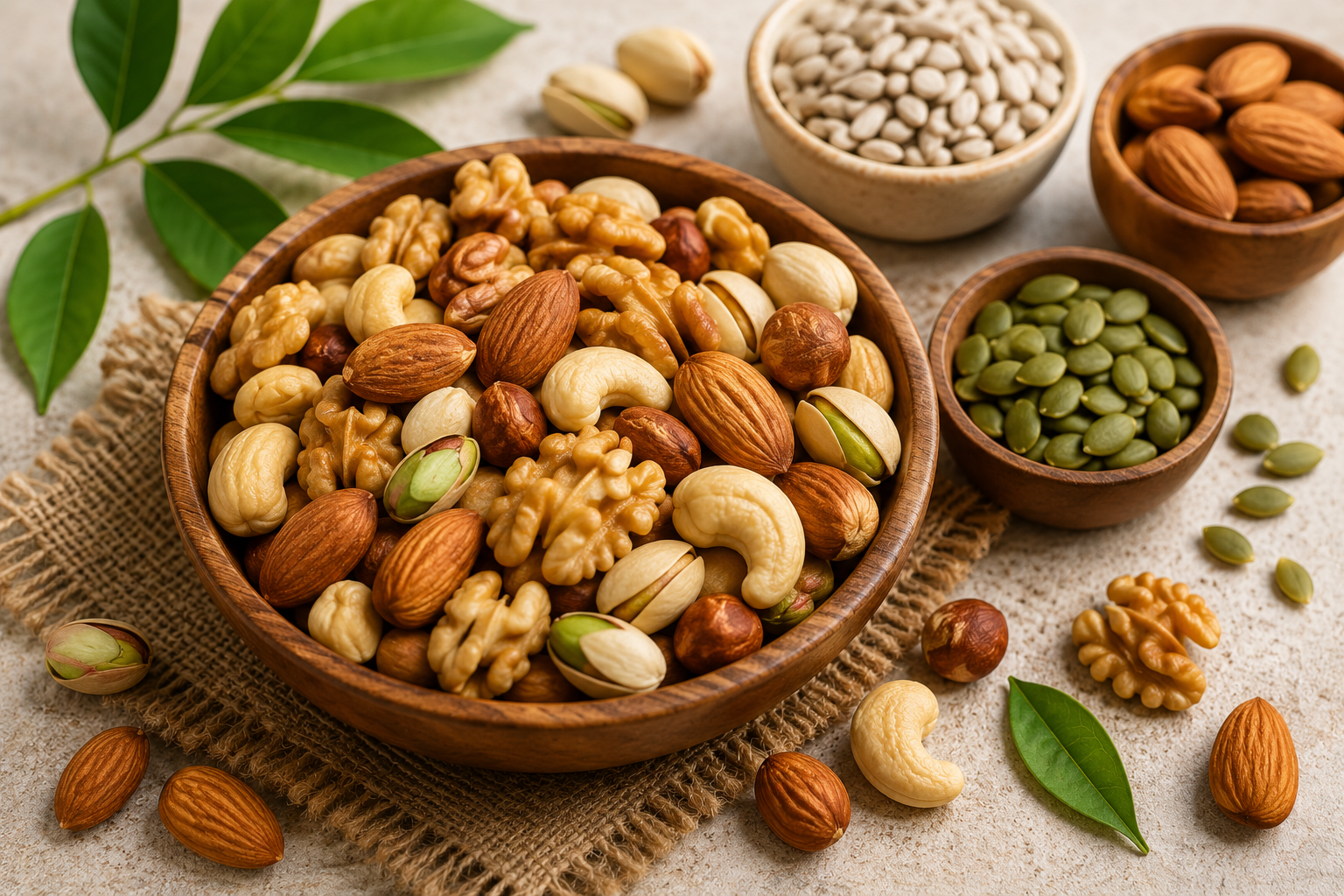
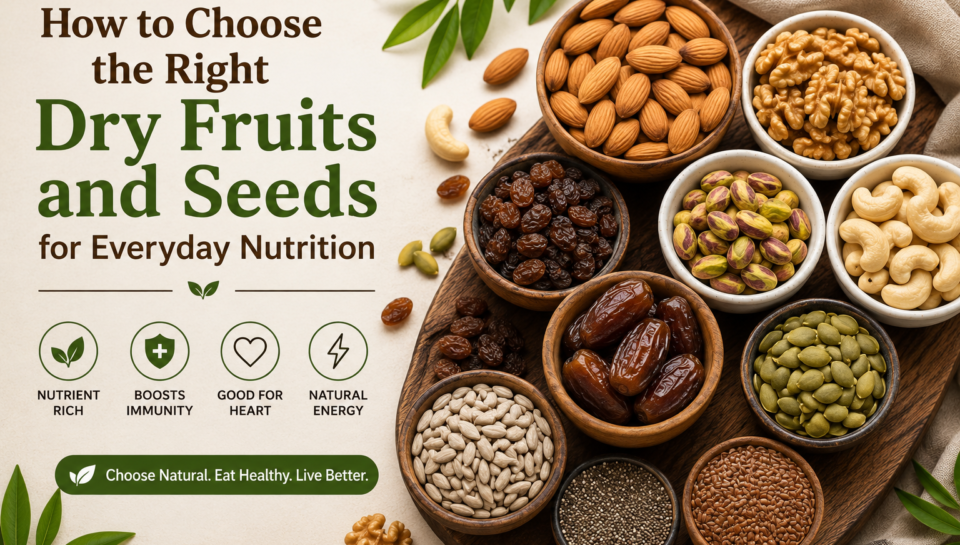
Dry fruits and seeds are easy to add to meals and snacks, making them a convenient choice for people looking to improve the nutritional value of their daily diet. Almonds, walnuts, cashews, raisins, dates, chia seeds, pumpkin seeds, and flaxseeds all provide different nutrients.
The key is not simply choosing one variety, but including a balanced mix according to your dietary needs and preferences.
Almonds for Protein and Vitamin E
Almonds contain protein, fiber, healthy fats, magnesium, and vitamin E. They can be eaten as a snack or added to oatmeal, smoothies, salads, and homemade snacks.
A small portion of almonds can be a convenient way to add nutrients to your daily meals.
Walnuts for Healthy Fats
Walnuts are particularly known for their plant-based omega-3 fatty acids. They can be added to breakfast bowls, yogurt, salads, or eaten on their own.
Their rich flavor also makes them a popular ingredient in baking and homemade recipes.
Cashews for Energy and Minerals
Cashews provide healthy fats, protein, magnesium, copper, and other nutrients. Their smooth texture works well in both sweet and savory dishes.
You can use them in curries, desserts, nut-based sauces, or simply enjoy a small portion as a snack.
Raisins and Dates for Natural Sweetness
Raisins and dates are dried fruits that provide natural carbohydrates and fiber. Their sweetness makes them useful for adding flavor to breakfast dishes, snack mixes, smoothies, and desserts.
Because dried fruits are concentrated compared with fresh fruit, portion size is important.
Chia Seeds for Fiber
Chia seeds are a simple addition to breakfast and snacks. They contain fiber, protein, healthy fats, and minerals.
They can be mixed into yogurt, smoothies, overnight oats, or soaked in milk to make chia pudding.
Flaxseeds for Plant-Based Omega-3s
Flaxseeds contain fiber, protein, and alpha-linolenic acid (ALA), a plant-based omega-3 fatty acid.
Ground flaxseed is often easier to incorporate into everyday foods. Try adding it to smoothies, oatmeal, homemade bread, or yogurt.
Pumpkin Seeds for Protein and Minerals
Pumpkin seeds contain protein, healthy fats, magnesium, zinc, and other nutrients. They can be roasted and eaten as a snack or sprinkled over salads, soups, and breakfast bowls.
How to Create a Balanced Dry Fruit and Seed Mix
Instead of relying on just one type, you can create a simple homemade mix containing different varieties.
For example, combine:
- Almonds
- Walnuts
- Cashews
- Pistachios
- Raisins
- Pumpkin seeds
- Sunflower seeds
You can adjust the combination according to your taste and dietary preferences. Choose unsalted and minimally processed varieties when possible.
What to Check Before Buying Dry Fruits and Seeds
When purchasing dry fruits and seeds, look for:
- Freshness and good-quality packaging
- Minimal added sugar
- Low or no added salt
- No unusual smell or signs of spoilage
- Proper storage instructions
- Clear information about ingredients and allergens
For bulk purchases, proper storage is particularly important because nuts and seeds contain natural oils that can become rancid when exposed to heat, moisture, or air for long periods.
How Much Should You Eat?
Dry fruits and seeds are nutrient-dense, so you do not need large quantities to include them in your diet. A moderate portion can work well as part of a balanced eating pattern.
Individual nutritional needs vary, especially for children, athletes, older adults, and people following specific diets. If you have a specific dietary requirement, consult a qualified nutrition professional.
Final Thoughts
Choosing dry fruits and seeds does not have to be complicated. Almonds, walnuts, cashews, raisins, dates, chia seeds, flaxseeds, pumpkin seeds, and sunflower seeds can all add different nutrients and textures to everyday meals.
The best approach is to choose a variety, pay attention to portion sizes, and select fresh products with minimal unnecessary additives.